
Paris Weather in July
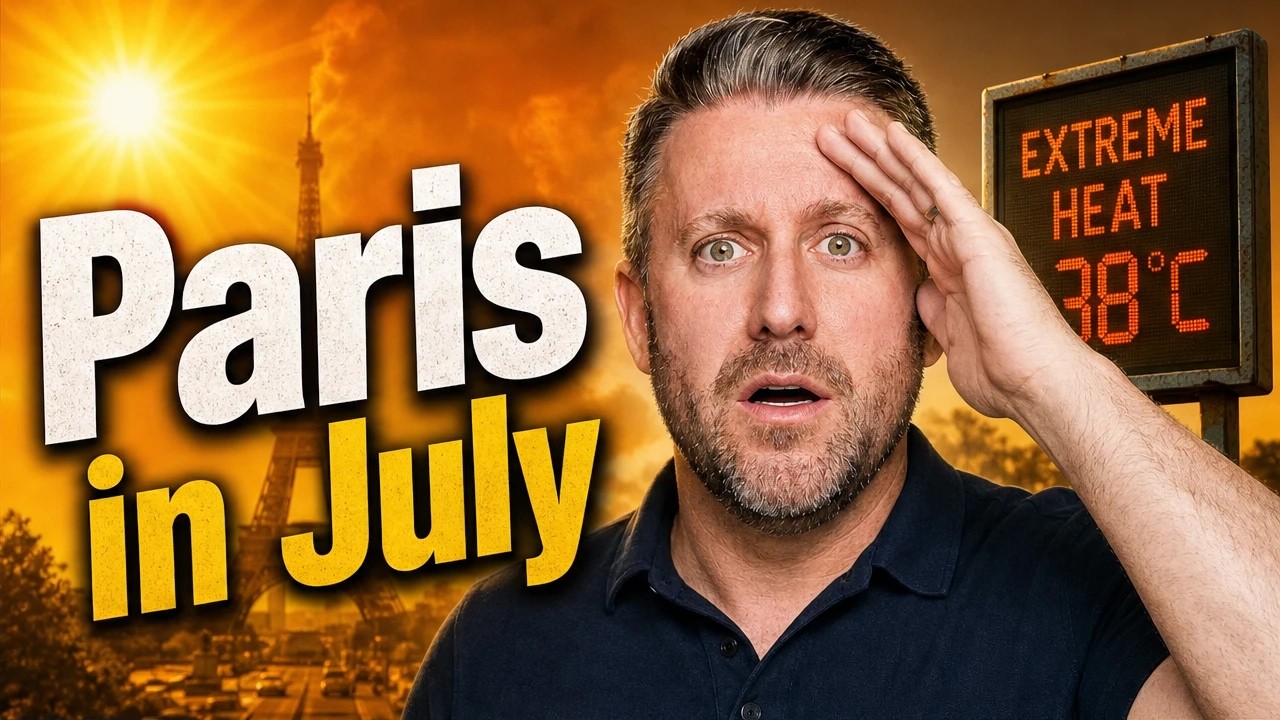
Planning a trip to Paris in July? Here's what the weather is really like during peak summer — and the one thing every traveler needs to plan around.
July in Paris is hot, mostly dry, and shaped by one defining factor: heat waves. Highs sit in the mid-70s to low 80s°F on a normal day, but when a high-pressure dome locks in and pulls hot Saharan air north, temperatures can spike well past 100°F. Most older Parisian buildings don't have air conditioning, the stone and rooftops create a strong urban heat island effect, and the heat can become genuinely dangerous — especially for kids and older travelers.
Rain is light at 7–9 days for the month, sunshine is plentiful, and many locals actually leave the city on vacation. If you're going in July, plan for the heat the same way you'd plan for a heat wave back home. Meteorologist Ian Schwartz breaks down what to expect.
At a glance
What's covered
- Highs, lows, and what "normal" July really looks like
- Rainy days and the occasional thunderstorm
- How Paris heat waves actually form
- Why the city's architecture makes heat worse
- Museum days, hydration, and survival strategies
- Why so many locals leave town
Jump to a moment
Paris in July FAQ
How hot does Paris get in July?
Normal highs sit in the mid-70s to low 80s°F, but heat waves driven by Saharan air can push past 100°F. Nights stay mild in the 60s. Rain is light at 7–9 days for the month.
Should I avoid Paris in July because of the heat?
Not necessarily — but plan around it. Confirm AC at your hotel, hydrate constantly, favor morning and evening for outdoor sightseeing, and use museums and cafés for midday breaks.
Why does Paris feel hotter than the temperature suggests?
Three reasons: older buildings without AC, the urban heat island effect (stone and rooftops radiate heat well after sunset), and humidity. Subway platforms and upper-floor apartments can be 10–15°F hotter than the street.